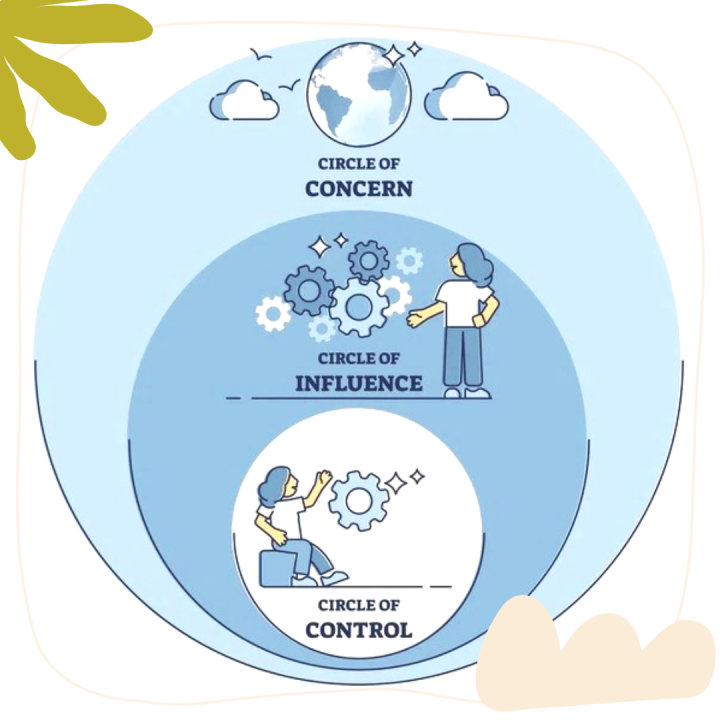
In the realm of leadership and workplace effectiveness, Steven Covey's "Circle of Influence and Control" concept stands as a beacon of clarity and empowerment. This could also extend to knowledge workers and most workers at large. At its core, this model focuses on what we can control, influencing what we can, and letting go of what we cannot. For knowledge workers, this approach can drastically reduce anxiety, enhance clarity, and sharpen focus, leading to higher productivity and well-being.
Understanding the Circles
Steven Covey's model divides our concerns into three concentric circles:
- Circle of Control: This innermost circle contains all the things you have direct control over. These are your actions, decisions, and responses.
- Circle of Influence: The middle circle encompasses the things you can affect indirectly. These include relationships, team dynamics, and projects where you can exert some influence but not direct control.
- Circle of Concern: The outermost circle includes everything else—things you care about but have no direct influence over, such as global events, company policies, or market trends.
Leadership and Workplace Dynamics
Effective leadership requires distinguishing between these circles and allocating energy accordingly. Leaders who focus primarily on their Circle of Control are proactive and solution-oriented, which fosters a positive workplace culture. When leaders extend their influence wisely, they build strong networks and collaborative teams, driving organizational success.
Combatting Anxiety, Boosting Clarity, and Sharpening Focus
Knowledge workers, in particular, face a myriad of information and demands, leading to a sentiment of being overwhelmed and great anxiety. It seems apparent that by applying Covey's model, they can:
- Reduce Anxiety: By shifting focus to the Circle of Control, minimizing stress related to uncontrollable items
- Boosting Clarity: By identifying what can be influenced versus what must be accepted. This will help clarify priorities.
- Sharpen Focus: By Focusing on controllable items to streamline efforts and productivity.
A Method for Decision-Making: The Point System
The following is an easy model to help you make clarity in your day to day. In order to operationalize this model, consider a point-based system to categorize tasks and concerns:
- Circle of Control (10+ points items): Tasks here are crucial and within your direct power. Assign points based on criteria like urgency, direct impact, and personal responsibility.
- Circle of Influence (5-9 points items): These items are important but less directly controlled. Points reflect factors like relational impact, potential to persuade, and indirect outcomes.
- Circle of Concern (<5 points items): These are low-priority items with minimal direct impact. Points are assigned based on how much these factors affect your emotional or mental state without offering control.
Now let's estimate and create focus!
3 simple steps really:
- Identify and score your tasks, items or concerns based on above method
- Triage based on scores into the appropriate circle
- Act accordingly based on the circle it lands into
Here are some examples of items you may encounter
Circle of Control (10+ points):
- Your own behaviors and actions – How you choose to act and respond in any given situation.
- Your own skills and knowledge – The learning opportunities you decide to pursue or skills you choose to develop.
- Your daily habits and routine – What you eat, how often you exercise, your sleep schedule, etc.
- Your mindset and attitude - The way you approach challenges and failures, your level of optimism.
- Personal goals – The targets you set for yourself professionally or personally.
Circle of Influence (5-9 points):
A great modus operandi within this circle is to follow the maxim : "It's your attitude, not your aptitude that will determine your altitude." from Zig Ziglar.
- Team morale and dynamics – The energy you bring into team collaborations or your attitude towards co-workers.
- Community involvement – Your engagement with the community or the company's goals.
- Mentorship relationships – Your rapport with an aspiring professional or learning from a seasoned mentor.
- Relationship with peers or supervisor – Your communication and interaction with them.
- Conduct of friends or family - While you cannot dictate their behaviors, your advice or feedback can influence their decisions.
Circle of Concern (<5 points):
- Economic climate – Recession, market trends, unemployment rates, etc.
- Global health crises – Pandemics, widespread diseases, etc.
- Team Resource Allocation: You often have to rely on other team members or departments (e.g., QA teams, graphic design) to complete projects. Decisions on resource allocation and schedules often lie with managers, making these areas of concern but not direct control or influence.
- Client Expectations: You may be assigned with projects that involve client work and can be concerned with fluctuating client expectations and requirements, which are generally outside your direct control.
- Regulatory Changes: Changes in laws and regulations related to product standards, marketing ethics, or data privacy may necessitate shifts in marketing or sales strategies. However, these legislative changes are not within your direct control.
Inspiring Leadership and Effective Workplaces
By embracing Covey's Circle of Influence and Control, leaders and knowledge workers can transform their approach to daily tasks. This method not only reduces anxiety but also fosters a clear, focused, and productive work environment. In my experience, the key to effective leadership lies in knowing where to direct your energy and how to empower those around you. However, you should have open discussions with partners, colleagues or friends included in your circle of influence in order to define boundaries, roles and shared responsibilities.